
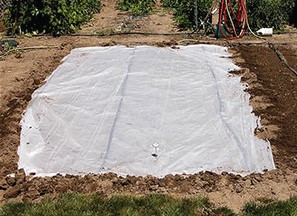
SOIL SOLARIZATION
Soil solarization is a pest and disease control technique that uses the radiant heat from the sun to eliminate many soilborne pathogens. In this process, the soil is mulched and covered with a tarp, usually a transparent polyethylene cover, which traps solar energy. Since heat is captured and used, this method causes some physical, chemical, and biological changes in the soil in the most natural way. These changes result to control or suppression of pathogens and soilborne diseases.
This technique works best in areas with lots of sun and high temperature. However, recent modifications have proven that it can also work in cooler areas and for cooler times of the year.
How to Solarize Soil
Thin plastic (1 to 2 mil) may permit more sunlight to penetrate to the soil. It has also been reported to favor more rapid and deeper control of soil -borne fungi than thicker plastic (6 mil). However, both eventually provide equal control and thicker plastic is less likely to tear.
Benefits of soil solarization
|
Objectives |
Expected outcomes |
Impacts |
|
To reduce weed population |
Fewer herbicide applications. Lower cost of production |
In the absence of high weed population, irrigation water and fertilizer used more efficiently. Greater crop yield and quality. |
|
To reduce soil pests and/or pathogens population |
Fewer white grubs, wire worms, weevils, fungal and bacterial pathogens and plant parasitic nematode |
Population of beneficial microfrlora of soil increased and incidence of soil pathogens decreased. Root health improved. Less losses due to pest damage, improved crop yield and quality. Number of pesticide applications reduced. Safer crop for human consumption. |
|
To empower farmers with effective and sustainable method of soil management |
To enhance biological activity of soil. |
Organic matter breaks down quicker due to high activity of soil microorganisms. Physical structure of soil improved. |