
Vermiculture
Continuous breeding of earthworms in boxes for production of high quality organic compost.
Vermiculture is a simple and cheap way to produce a continuous supply of organic compost of high quality.
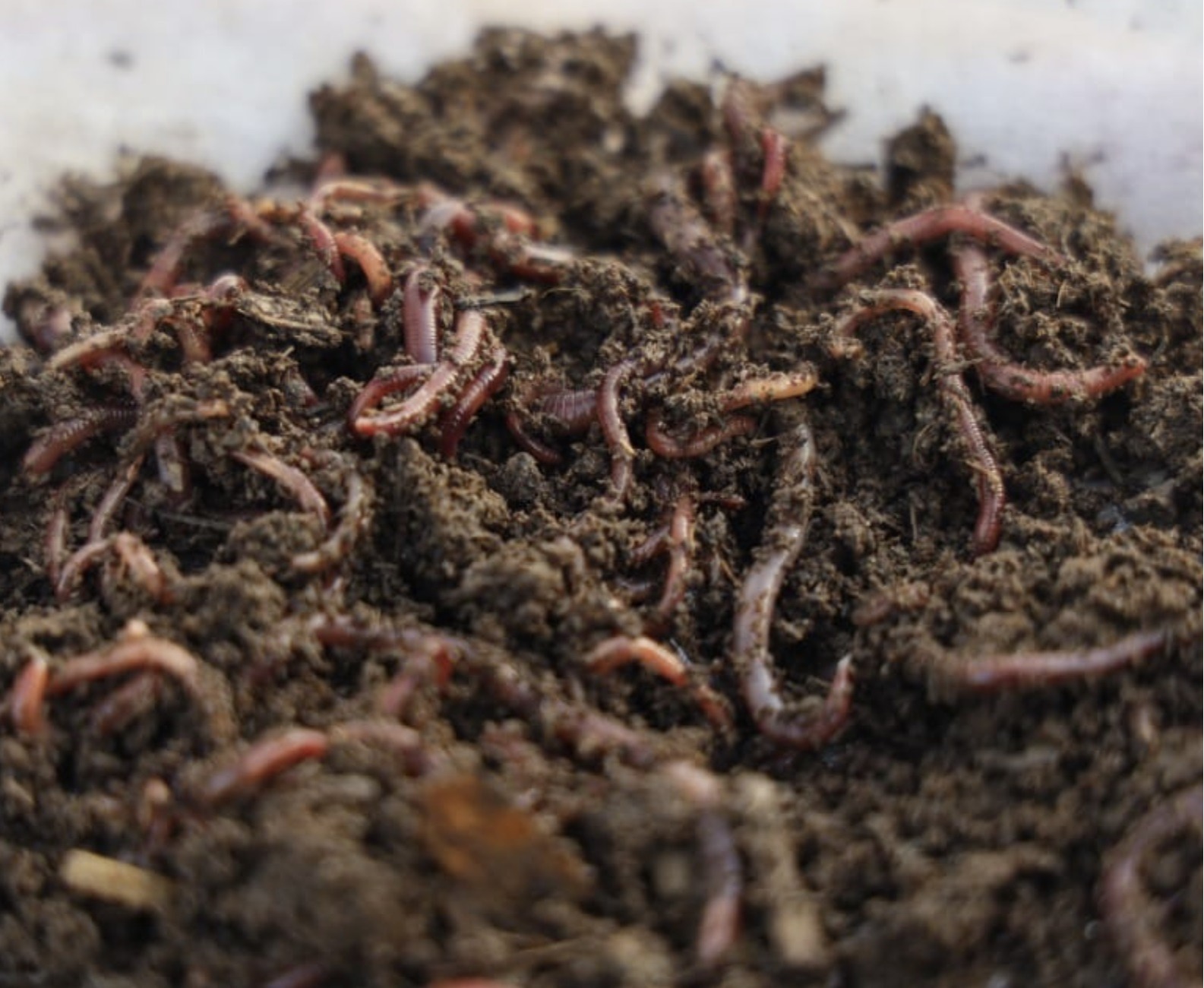
Elisenia foetida, the Red California earthworm (also called ‘the red wiggler’) is ideal for vermiculture since it is adapted to the wide range of environmental conditions. The compost produced by the earthworms has a dark colour, no smell and a loose and spongy structure. It is a high value product which is very rich in nutrients , and in a form that makes them readily available to vegetation.
An Application of Organic Compost can Address the Following Land use Problems
Under culture, the worms are kept under shade, in long wooden boxes filled with earth, cattle manure and an absorbent material. The box is covered by sheet metal (or wood, thick plastic sheeting, or banana leaves) to protect worms against UV radiation and birds/chickens, and also to maintain a favorably humid microclimate.
Fresh cattle manure is a perfect food for the worms, but rotten coffee pulp can also be fed. Chopped crop residues (eg cowpeas, leucaena leaves and other legumes) may be added. The content of a full box can be harvested every 3-4 months, and is used for crops, mainly coffee and vegetables, but also maize (corn0 and beans. It is very effective in increasing soil fertility, crop production, improves soil structure, infiltration and water storage capacity.
The compost can be applied directly to coffee, mixing it with an equal amount of earth and applying 1 kg to each plant. Alternatively, it can be sprayed: for preparation of liquid fertilizer 50 kg of compost are mixed with 50 liters of water and left to soak for 5 days. The concentrated solution produced is mixed with water at ratio of 1 to 10 1 and applied to the crop using a knapsack sprayer. The earthworms reach their reproductive age after three months and leave for many years. In perfect conditions an earthworm produces up to 1,500 offspring per year. Therefore, new cultures can be easily established, or earthworm stocks can be sold according to the farmer’s needs. A certain amount of earthworm compost is kept back and being used instead of fresh earth to reinitiate the whole process, or to start new cultures. Earthworm culture does not depend closely on the external environment, but it is essential to maintain favorable conditions inside the box- namely continuous feeding and wetting. Ants, the main enemy of earthworms, can be controlled standing the boxes on poles it can filled with water.
Ratio of 1 to 10 can be prepared by using one part of concentrated solution in nine parts of water.
Implementation
No specific timing (implementation is possible at any time)
Tools required:
Hammer nails, buckets/wheelbarrow, shovel, possibly water hose.
Duration for Establishment: 2 days
Maintenance:
Remarks: The inputs are estimated for the production of approximately 4,000 kg of worm compost, which is enough for one hectare of coffee per year.
Impacts of technology
|
Benefits |
Description |
Disadvantages |
|
Production of socio-economic benefit |
Crop yield increased Production increased Farm income increased |
None |
|
Socio-cultural benefits |
Improved knowledge On soil, water conservation/erosion |
none |
|
Off-site benefits |
Reduced river pollution(lower inputs of chemical fertilizers) |
none |
|
Ecological benefits |
Increase in soil fertility Stimulation of soil fauna Increase in soil moisture (through improvement in soil water storage capacity) Improvement of soil structure |
Pests: the compost attracts pests like ants, flies, chickens etc. |