
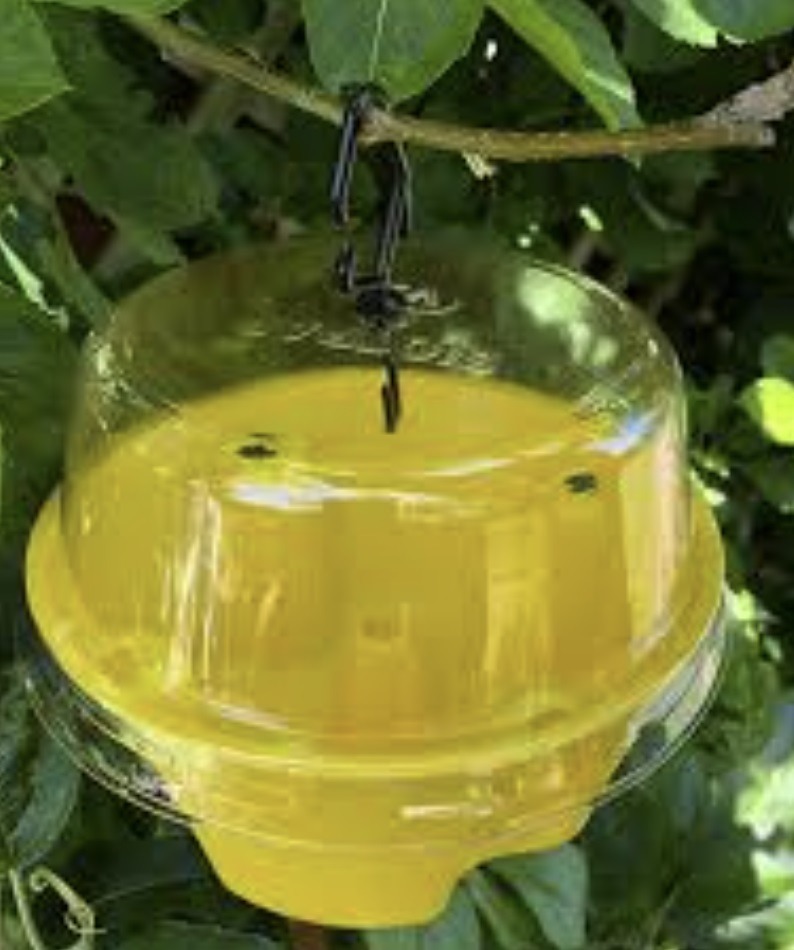
Fruit Fly Control with use of Torula Yeast Baited Traps
The West Indian Fruit Fly Anastrepha obliqua and Caribbean Fruit Fly Anastrepha suspensa are the major pests of mango in Jamaica. Other hosts include Guava, Otaheite Apple, June Plum, Hog Plum, Red Coat Plum and Yellow Coat Plum. All varieties of mango can be infested by the fruit flies but some varieties are less preferred, e.g. those with bitter skin. Levels of fruit fly infestation depends on the agro-ecological conditions and surrounding host plants.
Damage: Some damage can be caused when the female ‘stings’ the fruit to lay her eggs. When this occurs, latex ooze from the wounds and can be observed on the skin. Females usually select only maturing or mature fruits to lay their eggs. However in case of Julie, some immature fruits are also attached. Those young fruits may fall from the tree.
The most serious damage is caused by the larvae feeding on the pulp of the fruit. Creamish coloured maggots (worms) feed inside the fruit causing internal discolouration/ hardening, softening of the fruit, off-flavours, fruit-fall and general spoilage. When they emerge from the fruit to pupate they make exit hole in the skin. Fungi and bacteria then enter the fruit through these holes and cause rotting.
Control: Fruit flies thrive in dark, humid conditions. Prune trees and ensure adequate drainage. Wild hosts, such as guava, hog plum and wild mango, are the source of infestation for commercial orchards. Remove and destroy fallen fruit. Fruit flies are attracted to various bait and lures. Those can be placed in traps to capture flies. Trapping method had been successfully validated in Jamaica and should be promoted widely for the use by commercial farms and individual householders.
Trapping:
Comparison of trapping method versus chemical control
|
Description |
Chemical control with insecticide spraying |
Control of fruit flies with use of baited traps |
|
Impact on health and environment |
Frequent applications of toxic insecticides may result in human exposure, environmental contaminations, damaging effect on beneficial insects and other organisms and possible builds up of pest resistance. Pesticide spraying within residential areas is a cause of serious safety concern |
Environmentally safe and sustainable method. Pellets have low toxicity to humans. Trap handling is simple. Very effective for commercial and backyard use. |
|
Cost of application |
Requires use of expensive insecticides and equipment (mistblower and/or tractor mounted sprayer). Weather conditions must be suitable for spraying. |
Fortnightly trap servicing requires input of manual labourer. Cost of application can be reduced by making self-made traps. Cost of bait is lower. Re-use of soft drink bottles reduce pollution. |