
Goat Production
Practical Guidelines for Management from Breeding to Kidding
Management of the Breeding Herd
Management prior to breeding
Select does for your breeding herd that is not more than 2 years old (1—2 pairs of permanent teeth). Avoid old does (may have bad habits). Does should have shiny coat, straight legs, good conformation and alert eyes. Avoid animals with weak legs, bad hooves, thin bones, dull coat, cough, nasal discharge, or other signs of ill health.
Breeding season
Goats generally tend to be seasonal breeders. The temperate breeds tend to cycle between June and January with peak heats occurring between July and October. The Native goat will cycle all year with peak heats occurring between April and January. It’s best to breed young does at 7— 8 months of age (80 lbs. Boer, 70 lbs. Nubian, 60 lbs. Native).
A good selection of Does for breeding
Preparation for breeding
Flushing - Two to three weeks prior to breeding, does should be exposed to extra grain or fresh pasture to stimulate ovulation and increase the chance of producing twins.
Deworming - Deworm and delouse all does and bucks prior to breeding.
Signs of estrus (heat)
The heat cycle occurs every 21 days and lasts for 24-48 hours. It’s best to have the doe served 12 hours after onset of heat.
Does showing increased interest to the buck.
Mating System
On pasture - The buck is allowed to run with the does during the breeding season for at least 6 weeks (2 heat cycles), at a ratio of 1 buck to 35 does. Tupped does are easily identified if bucks are equipped with a marking harness. Additionally, farmer must record date of introduction and removal of buck to forecast kidding dates.
In confinement—Does on heat are taken to the preselected buck for service. The date of service, buck and doe identification is recorded.
Management of Pregnant Doe
Recording of service date facilitates accurate forecasting of kidding date (gestation is 5 months). Check does 21 days after service for returns to heat. This can be done using a restrained buck.
Preparation for parturition (kidding)
Signs of kidding
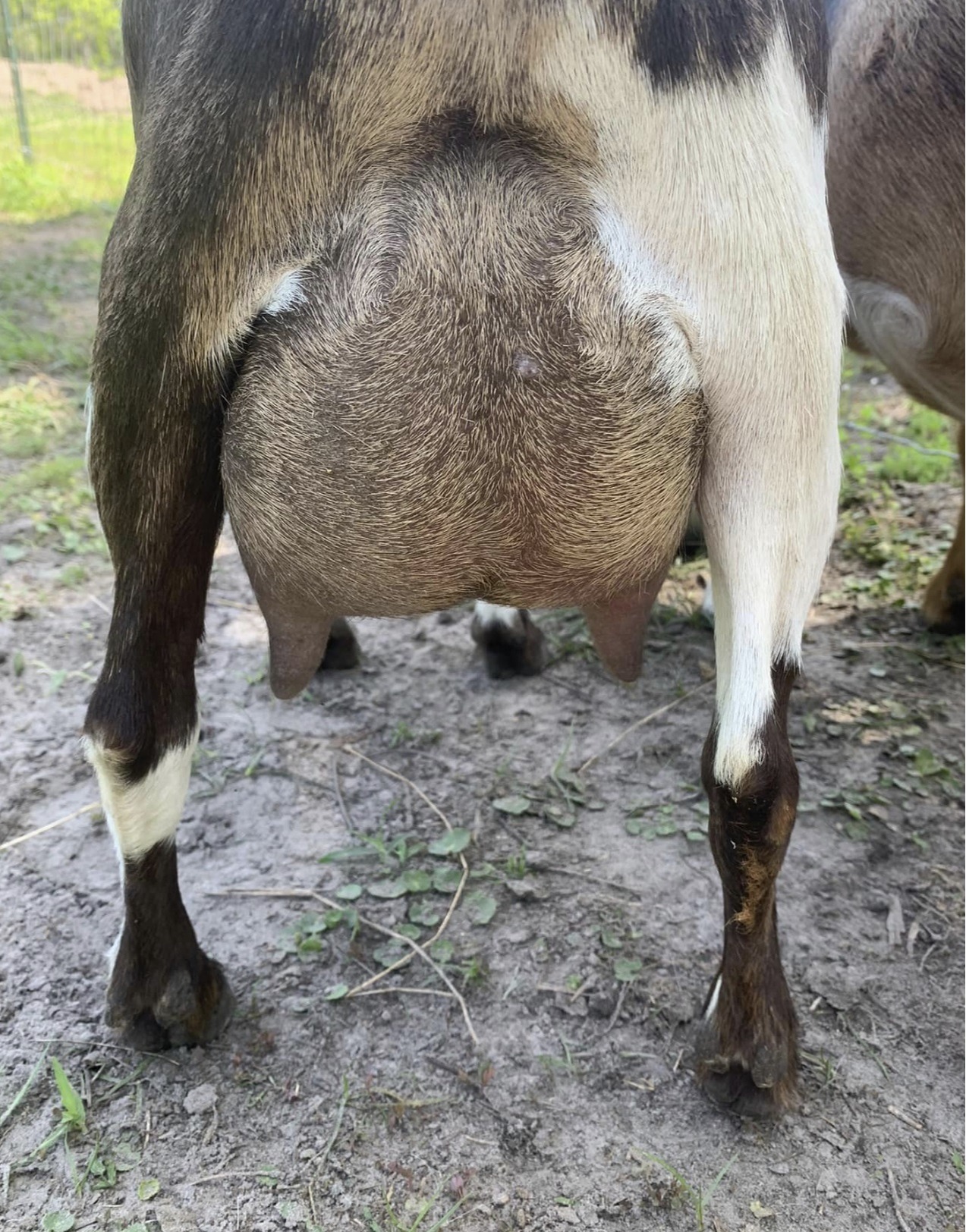
Three to five days prior to kidding the udder rapidly enlarges, a hollow develops on either side of the tail head and there is a vaginal discharge. On the day of kidding the following signs appear:
Boer doe with newborn kid. Afterbirth is still hanging from birth canal
Management of doe and newborn