
Goat Production
Practical Guidelines about the Management Systems Available
The Three Goat Management Systems
Intensive System
Characteristics:
Feeding
Under Intensive Management System meat goats are fed at 3 - 5% of their body weight in dry matter. They have no access to grazing and are fed cut forages viz grass and legumes, leaves and stems of nutritive plants (e.g. mulberry, erythrina, glyricidia and Leucaena etc.) They may also be fed conserved forages such as hay and silages. Sixty percent (60%) of the dry matter (DM) should come from the forage and 40% from the concentrate component of the diet. Concentrates include commercial grain (proprietary ration) as well as high energy and high protein agro- industrial by-products.
Housing
The goats are housed full-time with the buildings partitioned into compartments based on life cycle stage e.g. weaners, dry does, lactating doe and kid and buck pen. The houses are constructed with feeding area and loafing area for exercise.
Breeding Program
Does under intensive Management System can be bred using
Semi-Intensive System
Characteristics
Feeding
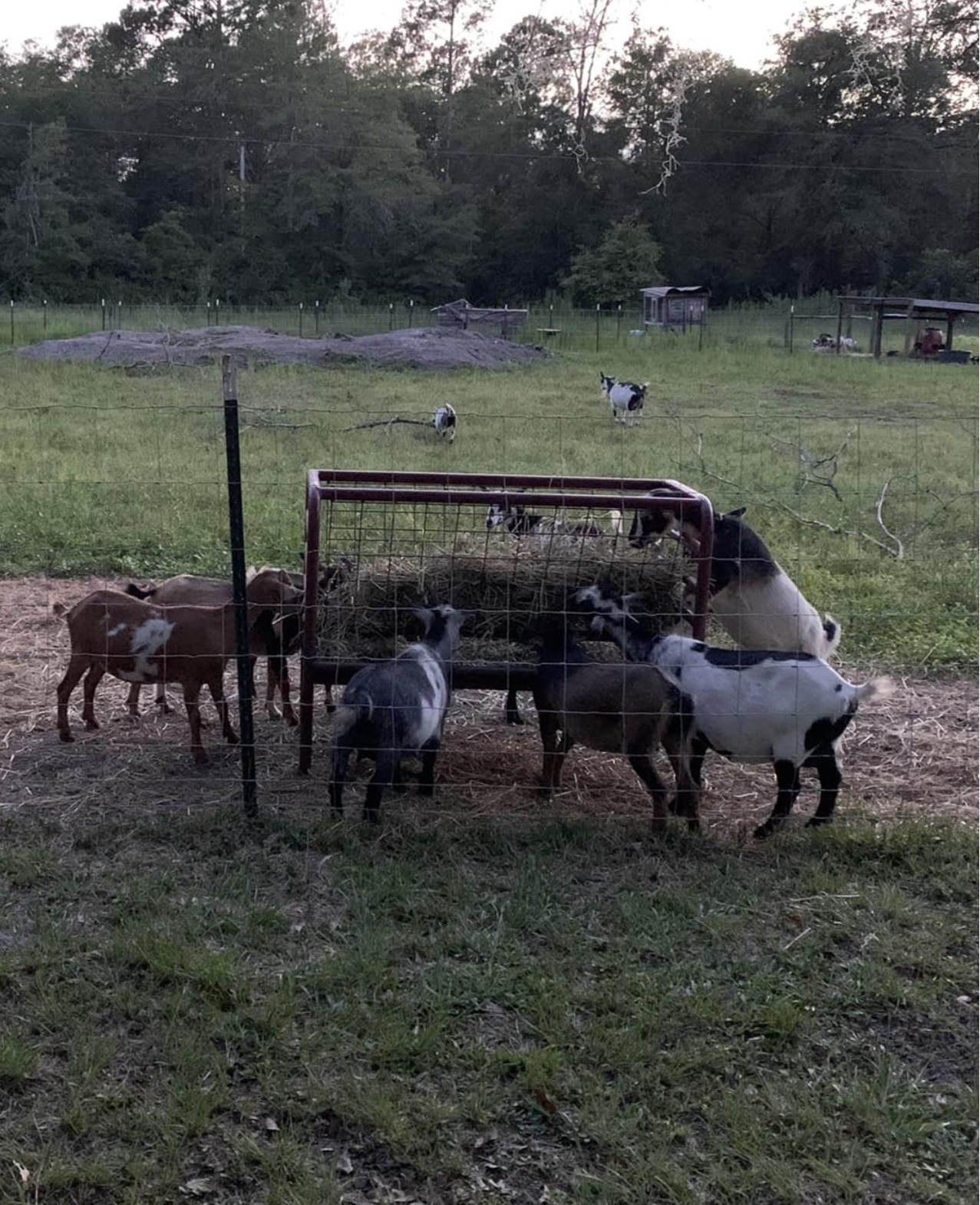
Animals are allowed to graze during the day following a pasture rotation system. The minimum cycle should be 42 days with 35 days rest for each pasture to allow for grass recovery and interruption of the worm cycle.
At nights the animals are housed for security and supplementary feeding. They can be fed 2% of the body weight in dry matter (d.m.) as grain supplement.
Housing
Housing can be similar to intensive utilizing less floor space per animal.
Breeding Program
Extensive Management System
Characteristics:
Feeding
Range grazing on poor quality, unimproved native pastures. Low stocking rate (3-4 goat animal units per acre) is obtained in this system. No supplementary feeding provided.
Housing
Cheaply constructed rainproof sheds can be built in the pastures to shelter goats from the elements.
Breeding Program
Bucks are allowed to run with the does throughout the breeding season. Matings are not identified so all kids born are assigned to the buck present at time of exposure (5 months prior).